

When someone needs a lawyer, they often start by searching online. They might look for a personal injury attorney after an accident, a family lawyer during a divorce, or a business attorney to review a contract. The law firms that appear in those searches have an opportunity to connect with potential clients at a moment when legal assistance may be a priority.
However, appearing in search results is only one part of the process. A law firm’s website also needs to demonstrate relevant experience, explain its services clearly, build trust, and make it easy for visitors to contact the office.
Law firm SEO is the process of improving a legal website’s visibility in organic search results to attract relevant visitors and generate qualified inquiries. It combines keyword research, website optimization, local SEO, helpful legal content, reputation management, technical improvements, and performance measurement.
For law firms, an effective strategy must account for more than search volume. Practice area, location, competition, the value of potential cases, and the firm’s ability to handle new inquiries all influence which SEO opportunities deserve attention.
This guide explains how law firm SEO works, what a campaign should include, how much it may cost, and how to evaluate an SEO agency before investing.
What Is Law Firm SEO?
Law firm SEO is a specialized approach to search engine optimization for attorneys, solo practitioners, and legal practices. Its goal is to help a firm appear when potential clients search for relevant legal services, questions, or attorneys in a particular location.
For example, a law firm in Miami might want to reach people searching for:
- Personal injury lawyer in Miami
- Miami divorce attorney
- Business litigation law firm
- Estate planning lawyer near me
- How to respond to a breach of contract claim
Each search reflects a different need. Someone looking for a lawyer may be ready to contact a firm, while someone researching a legal process may still be gathering information.
A strong SEO strategy addresses both groups with appropriate pages and content.
Law firm SEO generally includes six core areas:
- Keyword strategy: Identifying searches relevant to the firm’s services, locations, and ideal clients.
- On-page SEO: Improving titles, headings, service pages, internal links, and page content.
- Local SEO: Strengthening visibility for geographically relevant searches and Google Maps results.
- Technical SEO: Making the website accessible, crawlable, indexable, and usable across devices.
- Authority building: Earning relevant links and developing a credible online presence.
- Conversion optimization: Helping visitors understand the firm’s services and take the next appropriate step.
These activities work together. Publishing more blog posts, for example, will not necessarily produce more inquiries if important practice pages are difficult to find or the contact process is confusing.
Why Does SEO Matter for Law Firms?
SEO can help a law firm reach people who are actively looking for legal information or representation. Unlike marketing that interrupts an audience, organic search can connect a firm with users who have already expressed a relevant need through their searches.
The potential benefits extend beyond traffic.
Reach people searching for specific legal services
Broad searches such as “lawyer” can be difficult to target and may not communicate a clear need. More specific searches can reveal the practice area, legal issue, or location that matters to a prospective client.
A family law firm, for example, could build content around divorce, child custody, spousal support, and adoption if these services match its actual practice.
Build trust before the first consultation
Legal decisions can involve substantial financial, personal, or professional consequences. Visitors often want to understand a lawyer’s background, areas of practice, approach, and relevant experience before making contact.
Clear attorney biographies, accurate practice descriptions, helpful explanations, and transparent contact information can make a website more useful to prospective clients.
Develop a long-term source of inquiries
Organic search can continue sending visitors after an individual page has been published. Maintaining and improving that visibility requires ongoing work, and results are not guaranteed, but SEO can become a useful part of a firm’s broader client acquisition strategy.
Compete in local search
For many firms, location is central to search intent. A well-structured website, accurate business information, relevant local content, and a properly maintained Google Business Profile can support local discovery.
Google explains its requirements for accurate business representation in its official Google Business Profile guidelines.
What Do Law Firm SEO Services Include?
Professional law firm SEO services should address the firm’s actual business goals, website condition, practice areas, target locations, and competitive environment. The exact scope varies, but the following areas form a practical starting point.
1. Legal keyword research
Keyword research identifies the searches a firm should prioritize based on relevance, intent, competition, location, and potential business value.
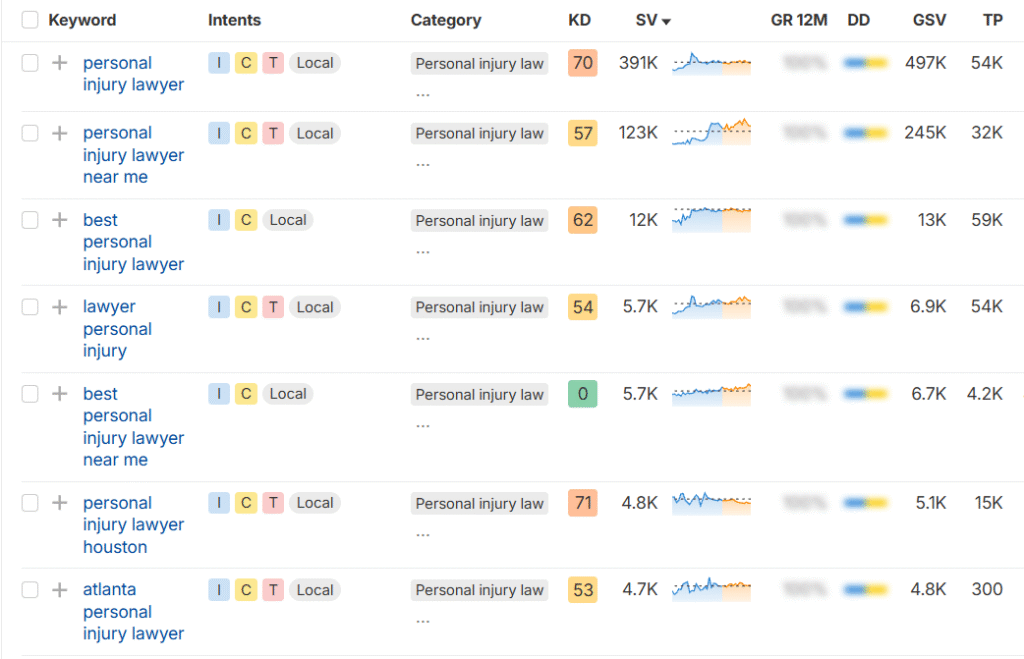
A useful keyword map separates search terms by purpose.
| Search intent | Example keyword | Recommended page |
| Hiring intent | personal injury lawyer in Dallas | Personal injury service or location page |
| Practice-area research | business litigation attorney | Business litigation page |
| Legal information | what happens after a car accident | Educational blog |
| Local discovery | family lawyer near me | Relevant local pages and Google Business Profile |
| Provider comparison | law firm SEO agency | SEO agency service or comparison content |
Search volume is one input, not the entire decision. A keyword with fewer searches may be more valuable if it consistently attracts people seeking a service the firm provides.
A law firm SEO company should also review search results before assigning keywords. The results can reveal whether Google is primarily showing local businesses, individual service pages, legal guides, directories, or a mix of formats.
2. Practice area and location pages
Practice area pages help search engines and prospective clients understand what the firm handles. Each important service should have a dedicated page when there is enough distinct information to justify it.
A personal injury firm, for example, might create separate pages for car accidents, truck accidents, premises liability, and wrongful death if those are genuine areas of practice.
Useful practice pages should explain:
- The legal services the firm provides.
- The types of matters it handles.
- The general process a prospective client may encounter.
- The attorney’s relevant qualifications and approach.
- Important questions potential clients may have.
- How to contact the firm or request a consultation.
Location pages may also be appropriate when a firm genuinely serves multiple cities or maintains multiple offices. Each page should provide useful, location-specific information rather than simply swapping a city name into duplicate copy.
Avoid creating dozens of near-identical pages solely to target geographic variations. That approach can create a poor user experience and may offer little independent value.
3. Local SEO and Google Business Profile
For law firms that serve clients in specific geographic markets, local SEO can be an important source of discovery.
A local SEO campaign may include:
- Verifying and optimizing the firm’s Google Business Profile.
- Selecting appropriate business categories.
- Keeping business names, addresses, phone numbers, and hours accurate.
- Improving the firm’s location and contact pages.
- Developing a process for requesting genuine client reviews.
- Monitoring reviews and responding appropriately.
- Building relevant local citations.
- Earning links from legitimate local organizations and publications.
Local search visibility depends on several factors, and no agency can guarantee placement in the Google Maps results.
The firm’s Google Business Profile must reflect its actual business identity and eligible location. Do not add keywords to the business name unless they are genuinely part of the firm’s real-world name. Follow Google’s official profile guidelines.
4. Technical SEO
Technical SEO helps search engines access and understand a website’s important pages. It also addresses problems that can prevent potential clients from using the site effectively.
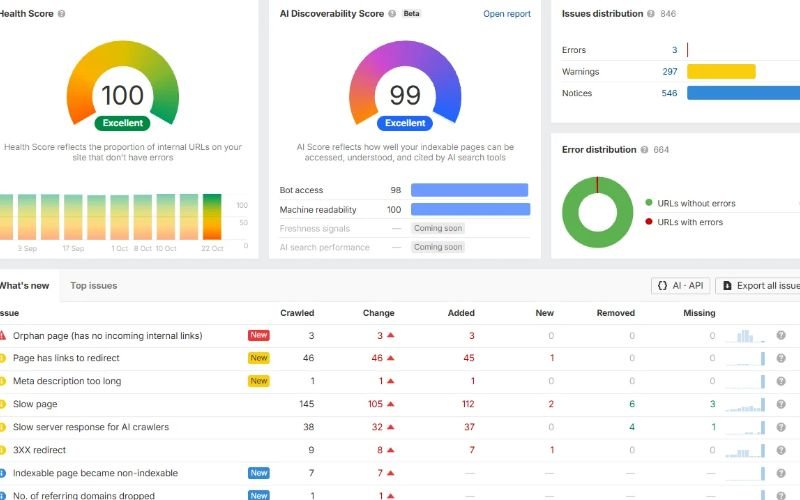
A technical audit for a law firm should examine:
- Crawlability and indexability.
- XML sitemaps and robots.txt directives.
- Broken links and unnecessary redirects.
- Duplicate pages and canonical tags.
- Mobile usability and page performance.
- HTTPS and other basic security considerations.
- Internal linking and navigation.
- Structured data implementation.
- Page templates and URL structure.
Suppose a firm has invested in detailed practice area content, but several important pages are accidentally marked noindex. Those pages may not appear in search results as intended. A technical audit can identify the issue and help prioritize a correction.
Technical improvements should be based on evidence from crawling tools, Google Search Console, analytics, and the website itself. Not every technical warning has the same business impact.
Google’s SEO Starter Guide provides useful guidance on making websites accessible, well organized, and helpful to visitors.
5. Legal content marketing
Legal content can help potential clients understand unfamiliar topics and discover a firm while researching a legal issue.
Useful content formats include:
- Explanations of legal processes.
- Answers to frequently asked questions.
- Guides to documents or information clients may need.
- Articles explaining relevant changes in law, with appropriate legal review.
- Comparisons of legal options where the subject permits a balanced explanation.
- Practical information about what to expect during a consultation.
For example, an estate planning firm could publish an article explaining the general differences between a will and a trust. The article should accurately describe the subject, identify relevant limitations, and avoid suggesting that one option is appropriate for every reader.
Legal content needs qualified review. Laws and procedures vary by jurisdiction, and content that is accurate in one state may not apply in another. When an article discusses legal rights, deadlines, or procedures, identify the relevant jurisdiction and have a qualified attorney review the material.
The objective is not to publish the highest possible number of articles. It is to create useful resources that support the firm’s practice pages, answer genuine questions, and help readers make informed decisions about their next steps.
6. Link building and online authority
Links from relevant, reputable websites can help people discover a law firm and provide search engines with additional context about its online presence.
Potential opportunities include:
- Local business and professional associations.
- Bar associations and legitimate legal directories.
- Community organizations and sponsorships.
- Relevant interviews and expert commentary.
- Original research or useful legal resources.
- Local news coverage and digital public relations.
A citation in a directory and an editorial backlink from a relevant publication are not the same thing. Both may have practical value, but their roles and quality differ.
Avoid buying large volumes of low-quality links or using networks designed primarily to manipulate rankings. Focus on links that make sense for the firm’s work, expertise, location, or community involvement.
7. Conversion tracking and intake optimization
A website can attract relevant visitors without generating many consultations. Sometimes the problem is not rankings; it is what happens after someone arrives.
Review whether visitors can quickly find:
- The relevant practice area.
- Attorney credentials and background.
- A clear phone number and contact form.
- Consultation information and expectations.
- Answers to common questions.
- A straightforward mobile experience.
Track meaningful actions such as qualified form submissions, calls, and consultation requests where measurement is legally and technically appropriate.
The firm’s intake process also matters. If inquiries go unanswered or prospective clients cannot reach the right person, marketing performance may suffer even when organic visibility improves.
Use analytics and call tracking carefully. Law firms should consider confidentiality, applicable privacy laws, consent requirements, and restrictions on collecting or transmitting sensitive legal information.
How to Build an Effective Law Firm SEO Strategy
A practical law firm SEO campaign starts with research and prioritization rather than immediately publishing new content or building links.
01 – Audit the existing website
Review indexed pages, technical errors, existing rankings, traffic, backlinks, site structure, and conversion tracking. Identify issues that could be limiting performance.
02 – Choose target practice areas and markets
Identify the legal services the firm wants to grow, the locations it actually serves, and the types of cases or clients it can handle.
03 – Map keywords to the right pages
Assign commercial terms to service pages and informational terms to relevant guides. Check existing URLs before creating new ones to avoid keyword cannibalization.
04 – Improve the website and local presence
Address technical problems, improve practice pages, strengthen internal links, maintain the Google Business Profile, and correct inconsistent business information.
05 – Publish and promote useful content
Build resources around real client questions. Support them with appropriate attorney review, credible sources, and relevant internal links.
06 – Measure results and adjust priorities
Review organic visibility, qualified inquiries, consultation bookings, and intake outcomes. Use the findings to guide the next round of work.
This process should be adapted to the firm. A new website with little established visibility may need foundational work, while an established firm might benefit more from improving underperforming service pages or resolving technical issues.
How to Build Local Citations for Law Firm SEO
Local citations are online mentions of a firm’s business information, often including its name, address, phone number, and website.
They can help prospective clients find the firm and make its business information easier to verify across the web. However, not every directory has equal value, and citation volume alone is not a reliable measure of local SEO success.
A practical citation-building process looks like this:
- Document the firm’s official business details. Confirm the real business name, office address, phone number, website, and other relevant information.
- Audit existing listings. Find duplicate profiles, incorrect phone numbers, old addresses, and outdated website links.
- Prioritize relevant sources. Start with the firm’s Google Business Profile, legitimate legal directories, appropriate bar association listings, and relevant local directories.
- Correct existing records before expanding. Fix errors and address duplicates where possible rather than creating unnecessary new listings.
- Monitor important profiles. Recheck listings after office moves, phone changes, website migrations, or changes in firm structure.
Not every citation must use exactly the same formatting in every field, but core business details should be accurate and consistent. Individual attorney listings and multi-office firms may require additional care to avoid confusing firm-level and practitioner-level information.
Do not create fake offices or use virtual addresses that do not qualify under Google’s rules. A directory listing should represent a real, legitimate business presence.
How Much Does Law Firm SEO Cost?
The cost of law firm SEO depends on the firm’s market, practice areas, website condition, campaign scope, and competitive environment. There is no single price that accurately represents every legal SEO campaign.
A firm targeting one local practice area may need a different level of work from a multi-location firm competing nationally for high-value cases.
Common pricing models include:
| Pricing model | How it works | Best suited for |
| Monthly retainer | Ongoing SEO work for a recurring fee | Firms requiring continuous optimization, content, and reporting |
| One-time SEO audit | A defined review with findings and recommendations | Firms that need to identify and prioritize problems |
| Project-based SEO | A fixed scope, such as a website migration or practice page overhaul | Firms with a specific technical or content need |
| Consulting | Strategic advice or oversight, often billed hourly or by engagement | Firms with an internal team that needs expert guidance |
When evaluating a proposal, ask what the fee includes. Does it cover technical implementation, content writing, attorney review coordination, link acquisition, local SEO, conversion tracking, and reporting? Or are some of those services charged separately?
A useful proposal should explain the work, why it is needed, how progress will be measured, and what is outside the scope.
Do not compare agencies on price alone. A low-cost plan that delivers reports but does not address the firm’s main obstacles may be less useful than a focused engagement with clear priorities.
How Long Does Law Firm SEO Take?
Law firm SEO does not follow a fixed timeline. The time needed to see meaningful results depends on the website’s current condition, existing authority, competition, target keywords, content quality, and the speed at which recommendations can be implemented.
Some technical fixes may be completed quickly, and search engines may process the changes at different times. Competitive ranking improvements and consistent growth in qualified inquiries can take considerably longer.
A realistic campaign distinguishes between implementation milestones and business outcomes.
For example:
- Early work: Technical issues are identified, tracking is checked, and priority pages are reviewed.
- Ongoing optimization: Content, internal links, local listings, and page relevance are improved.
- Performance evaluation: Rankings, organic traffic, calls, and qualified inquiries are compared against a baseline.
- Long-term refinement: The firm adjusts its strategy based on which practice areas, pages, and search terms contribute to meaningful outcomes.
These are stages of work, not guaranteed deadlines. An agency should avoid promising first-page rankings or a fixed number of leads by a specific date without a credible basis.
Why Is Law Firm SEO So Expensive?
Legal SEO can require substantial work because the competition for some practice areas and locations is intense. A campaign may involve technical specialists, keyword research, legal content development, attorney review, local SEO, digital PR, and ongoing analysis.
Several factors influence the cost:
- Practice area: Some legal services have more competitive search results than others.
- Geographic reach: One local office may require less work than a firm targeting several major markets.
- Website condition: Technical problems, poor page structure, or a migration may require significant remediation.
- Content requirements: Legal topics need accurate, useful information and appropriate professional review.
- Authority building: Earning relevant editorial links and developing a credible online presence takes time.
- Reporting and measurement: Connecting organic activity to qualified leads and retained clients can require additional tracking and intake coordination.
Higher fees do not automatically mean better SEO. A firm should assess the proposed work, the team’s relevant experience, reporting quality, implementation capability, and whether the strategy fits its goals.
How to Choose a Law Firm SEO Agency
A law firm SEO agency should be able to explain how its work relates to the firm’s services, market, and client acquisition goals. Avoid choosing a provider solely because it promises rankings or uses legal marketing terminology.
Before signing a contract, ask the following questions.
Does the agency understand your practice areas and market?
The agency should research the firm’s competitors, locations, target searches, and service priorities. A generic SEO plan may miss differences between personal injury, family law, estate planning, and business litigation.
Can it show verifiable work?
Ask for relevant examples of its process and outcomes. Useful evidence might include anonymized Search Console data, documented technical improvements, keyword visibility changes, or qualified lead trends.
Check whether reported results are attributable to SEO, whether the time period is clear, and whether the examples are relevant to your firm’s situation. Do not rely on screenshots without context.
Does the proposal explain the work?
A credible plan should identify priorities, deliverables, dependencies, and reporting frequency. It should also clarify who implements website changes and who reviews legal content.
How does the agency build links?
Ask how links are sourced, whether placements are editorially justified, and how the agency avoids manipulative tactics. Be cautious of guaranteed link counts without meaningful quality criteria.
How will performance be measured?
Rankings can help diagnose visibility, but the firm should also understand whether organic search is generating relevant inquiries and consultations. The agency should explain what it can measure reliably and what depends on the firm’s intake system.
Does the agency respect legal advertising rules?
Attorney advertising requirements vary by jurisdiction. The American Bar Association’s Model Rule 7.1 states that communications about a lawyer’s services must not be false or misleading.
This matters for SEO content, testimonials, claims about results, comparisons with other firms, and promotional landing pages. The firm’s lawyers should review content for compliance with the professional conduct rules applicable to their jurisdictions.
How to Measure Law Firm SEO Results
The purpose of law firm SEO is not simply to increase the number of visitors. It is to improve the firm’s ability to attract relevant prospective clients and understand which marketing activities contribute to business outcomes.
A useful reporting framework includes four levels.
| Measurement area | What to monitor | What it helps explain |
| Search visibility | Impressions, clicks, rankings, indexed pages | Whether the firm’s pages are becoming more visible |
| Website engagement | Landing pages, relevant visits, contact-page activity | Whether visitors are reaching useful information |
| Lead generation | Calls, forms, consultation requests | Whether organic visits generate inquiries |
| Lead quality | Qualified inquiries, consultations attended, retained matters where trackable | Whether SEO supports the firm’s business objectives |
Google Search Console can help analyze search impressions, clicks, queries, and pages. Analytics and appropriately configured call tracking can help connect website visits to inquiries.
The firm should also establish a baseline before making major changes. Without one, it can be difficult to distinguish SEO improvements from seasonal demand, changes in advertising, website redesigns, or other marketing activity.
Where feasible, compare performance by practice area and landing page. A rise in traffic to an informational article may be valuable, but it should not be mistaken for an increase in qualified legal inquiries without supporting evidence.
How AI Search and LLM Visibility Fit Into Law Firm SEO
People may discover legal information through traditional search results, AI-generated summaries, or conversational search tools. A law firm’s content should be clear, accurate, well structured, and supported by trustworthy sources so readers and search systems can better understand it.
This is where answer engine optimization (AEO) and generative engine optimization (GEO) can complement traditional SEO.
Practical steps include:
- Answer common questions directly near the relevant heading.
- Identify the attorney, firm, jurisdiction, and subject matter clearly.
- Cite official legal sources when explaining laws, court procedures, or regulations.
- Keep attorney biographies, practice areas, addresses, and contact details accurate.
- Use descriptive headings and logical internal links.
- Maintain technically accessible pages and avoid hiding important content behind unnecessary barriers.
- Update articles when the law or relevant guidance changes.
For example, a guide about a state’s probate process should clearly identify the state, link to relevant official court or government resources, and explain that individual circumstances can change the applicable process.
These practices improve clarity and traceability. They do not guarantee that Google AI Overviews, ChatGPT, Gemini, Perplexity, or another system will cite the firm.
Structured data for law firm websites
Structured data can help search engines interpret information about a website, organization, or person. Depending on the firm’s website, relevant types may include Organization, LegalService where supported and appropriate, Person for attorney biographies, and BreadcrumbList.
Choose markup based on the actual page and the current requirements of the relevant search platform. Structured data must match visible content and should not be used to imply credentials, reviews, or services that the firm cannot substantiate.
Review Google’s structured data guidelines before implementation. Markup does not guarantee enhanced search results or AI citations.
Frequently Asked Questions About Law Firm SEO
What is the best SEO strategy for a law firm?
The right strategy depends on the firm’s practice areas, location, competition, website condition, and business goals. Most campaigns should begin with an audit, targeted keyword research, strong practice area pages, local SEO where relevant, technical improvements, and accurate performance tracking.
What agencies specialize in law firm SEO?
Look for agencies that can demonstrate relevant legal marketing experience, explain their methodology, show verifiable evidence, and understand attorney advertising requirements. Ask for a clear scope of work and examples of how the agency connects search performance with qualified inquiries.
How much does law firm SEO cost?
Pricing varies according to competition, location, website complexity, content needs, link acquisition, and campaign scope. Request a proposal that separates ongoing services from one-time projects and identifies any additional costs.
How long does law firm SEO take to work?
There is no guaranteed timeline. Technical improvements may be implemented early, while competitive search visibility and consistent lead growth can take longer. Results depend on the site’s starting point, competition, implementation, and ongoing optimization.
Why is law firm SEO so expensive?
Some legal markets are highly competitive, and campaigns may require technical work, attorney-reviewed content, local optimization, authority building, and careful conversion measurement. The value of a proposal depends on the quality and relevance of the work, not the fee alone.
How do I build local citations for law firm SEO?
Start by confirming the firm’s official business details, auditing existing listings, correcting errors and duplicates, and prioritizing legitimate legal directories, relevant associations, and local sources. Keep information accurate and follow Google’s Business Profile rules.
Is local SEO important for law firms?
Local SEO is especially relevant when a firm serves clients in a defined geographic market. A complete Google Business Profile, useful location pages, accurate listings, genuine reviews, and relevant local authority can support local discovery.
Can a law firm do SEO in-house?
Yes. An internal team can manage SEO if it has the necessary technical, content, local search, and analytical skills. Some firms use an agency for specialized audits, implementation, strategy, or additional capacity. The right model depends on internal resources and campaign complexity.
Does law firm SEO guarantee more clients?
No. SEO can improve search visibility and create opportunities for relevant inquiries, but rankings, traffic, and client acquisition are affected by competition, demand, website quality, reputation, intake processes, and other factors. A reputable provider should explain these limitations rather than guarantee a specific outcome.
Build an SEO Strategy Around Your Law Firm’s Goals
A useful law firm SEO campaign starts by identifying where the firm can compete, which services it wants to grow, and what prevents prospective clients from finding or contacting it.
For one firm, the priority may be improving local visibility and correcting inconsistent listings. Another may need stronger practice area pages, a technical cleanup, or a content strategy focused on its most valuable services.
At Niche SEO Agency, the first step is to understand the website, target market, existing search visibility, and business objectives before recommending a plan. The goal is to connect SEO activity with measurable improvements rather than focusing on rankings in isolation.
Explore our SEO services to learn about our approach to technical optimization, local SEO, content, and authority building.
Want to identify SEO opportunities for your law firm? Contact Niche SEO Agency to discuss your website, target practice areas, and opportunities to improve organic search visibility.