
Running a Shopify store is relatively easy. Getting the right people to find that store is a different challenge.
You can have excellent products, a professional design, competitive prices, and a smooth checkout process, yet still struggle to generate consistent organic traffic. The problem is often not the Shopify platform itself. It is how the store is optimized for search engines and, more importantly, for the people using them.
This is where Shopify SEO experts can make a meaningful difference.
A specialist understands that ecommerce SEO is more than adding keywords to product descriptions. It involves understanding search intent, optimizing collections and product pages, fixing technical issues, improving internal linking, building topical authority, earning relevant backlinks, and making sure search engines can properly understand your products.
We approach Shopify SEO as a long-term growth strategy rather than a checklist of isolated tasks.
What Are Shopify SEO Experts?
Shopify SEO experts are SEO professionals who specialize in optimizing Shopify stores to improve their visibility in organic search results.
Unlike general SEO, Shopify SEO requires an understanding of ecommerce search behavior and the technical characteristics of the Shopify platform.
A specialist may work on areas such as:
- Shopify keyword research
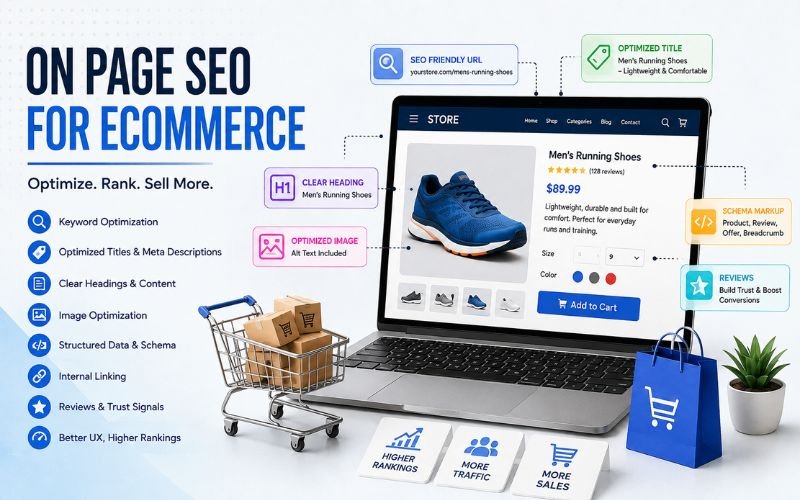
- Product page optimization
- Collection page SEO
- Technical SEO
- Site architecture
- Internal linking
- Metadata optimization
- Image SEO
- Structured data
- Content marketing
- Ecommerce blogging
- Product and collection indexing
- Canonicalization
- Redirect management
- Page speed and Core Web Vitals
- Backlink acquisition
- Google Search Console
- Organic traffic and conversion analysis
Shopify already provides several SEO features automatically, including a logical site structure and XML sitemap functionality. However, built-in functionality does not mean a store is automatically optimized to compete for valuable search terms.
The job of an experienced Shopify SEO professional is to identify what is holding the store back and create a strategy around its products, customers, competitors, and search demand.
Why Shopify Stores Need SEO
Launching a Shopify store does not guarantee that Google will send customers to it.
Search engines need to understand:
- What your business sells
- Which products are most important
- Which searches your pages should appear for
- How your products relate to one another
- Whether your content satisfies search intent
- Whether your website is trustworthy and authoritative
For example, imagine a store selling premium running shoes.
A product page might target:
Men’s Trail Running Shoes
But customers could search for:
- men’s trail running shoes
- waterproof trail running shoes
- best trail shoes for rocky terrain
- lightweight trail running shoes
- trail running shoes for beginners
- men’s hiking and trail shoes
- durable trail running shoes
A good Shopify SEO strategy does not attempt to force every keyword onto one product page.
Instead, it determines which search terms belong on product pages, collection pages, category content, buying guides, and blog articles.
This creates a website that covers the entire customer journey.
Shopify itself recommends researching relevant search terms, understanding search intent, and using keywords naturally across page titles, descriptions, headings, image alt text, and content.
What Do Shopify SEO Experts Actually Do?
Hiring an SEO specialist should not simply mean receiving a monthly spreadsheet of keywords.
A capable Shopify SEO expert should be able to connect technical optimization, content, search demand, authority, and business objectives.
Here are some of the most important areas they should cover.
1. Shopify SEO Audit
The first step should usually be understanding the current condition of your store.
An SEO audit may examine:
- Organic traffic
- Keyword rankings
- Indexed pages
- Product pages
- Collection pages
- Duplicate content
- Canonical tags
- Internal links
- Broken links
- Redirects
- XML sitemap
- Robots.txt
- Metadata
- Heading structure
- Image optimization
- Structured data
- Mobile usability
- Page speed
- Core Web Vitals
- Search Console data
- Backlink profile
- Competitor visibility
The purpose is not to create a long list of technical problems.
The purpose is to identify the issues most likely to affect organic visibility and revenue.
A store with 5,000 products may have very different SEO priorities from a store with 50 products. An experienced specialist understands that difference.
2. Shopify Keyword Research
Keyword research is the foundation of an effective ecommerce SEO campaign.
However, simply choosing keywords with high search volume is not enough.
Shopify SEO experts should evaluate:
Search volume
How many people search for the term?
Search intent
Are users researching, comparing products, or ready to purchase?
Competition
Which websites currently rank for the term?
Business relevance
Does the keyword actually relate to your products and customers?
Commercial value
Could ranking for the term realistically contribute to sales?
For example, a keyword receiving 20,000 monthly searches might look attractive.
But if the search intent is purely informational and the searcher has no interest in purchasing your product, ranking for it may generate little revenue.
A lower-volume keyword such as “buy organic cotton baby clothes” could potentially be more valuable to an ecommerce store because the searcher is much closer to making a purchase.
Good SEO focuses on qualified traffic, not traffic for the sake of traffic.
3. Product Page SEO
Product pages are some of the most commercially important pages on a Shopify website.
Yet many store owners copy manufacturer descriptions, use short descriptions, or optimize every product around the same keyword.
That creates missed opportunities.
A Shopify SEO expert can optimize product pages around:
- Product names
- Primary keywords
- Secondary keywords
- Search intent
- Product benefits
- Features
- Specifications
- FAQs
- Customer concerns
- Internal links
- Image alt text
- Metadata
- Reviews
- Product structured data
Your product description should answer the questions a potential buyer actually has.
Instead of writing:
“Premium cotton shirt made from high-quality material.”
You could provide useful information about:
- Fabric composition
- Fit
- Sizing
- Washing instructions
- Intended use
- Available colors
- Manufacturing details
- Shipping information
- Warranty
- Common customer questions
This creates content that helps both customers and search engines understand the page.
Shopify also recommends creating unique product content rather than simply copying manufacturer descriptions that may appear across multiple websites.
4. Collection Page SEO
Collection pages are often overlooked.
For many Shopify stores, however, collection pages can be some of the strongest opportunities for ranking broader commercial keywords.
For example:
Poor structure
Home → Products → Product
Better structure
Home → Men’s Clothing → Men’s Jackets → Waterproof Men’s Jackets → Individual Products
Collection pages allow you to target broader search terms while individual products can target more specific queries.
A Shopify SEO expert may optimize:
- Collection title
- H1
- Collection description
- Title tag
- Meta description
- URL
- Product organization
- Internal links
- Supporting content
- Breadcrumbs
- Related collections
The goal is to create useful category pages rather than thin pages containing nothing more than a product grid.
5. Shopify Technical SEO
Technical SEO is where Shopify SEO specialists can provide significant value.
Shopify handles many technical SEO fundamentals automatically, but stores can still develop technical problems through themes, apps, custom code, product management, and poor site architecture.
Common areas to review include:
Crawlability
Can search engines efficiently discover your important pages?
Indexation
Are valuable pages being indexed while low-value or unnecessary pages are controlled appropriately?
Canonicalization
Are search engines receiving clear signals about the preferred version of a page?
Redirects
Are discontinued products and changed URLs properly redirected?
Site architecture
Can users and search engines easily move from broad categories to specific products?
Duplicate content
Are similar pages competing with one another?
Page performance
Are unnecessary scripts, apps, images, or theme elements slowing down the store?
Mobile experience
Does the website work properly across smartphones and tablets?
Structured data
Is useful product information being communicated to search engines in a machine-readable format?
Google specifically recommends ecommerce structured data such as Product, ProductGroup, BreadcrumbList, Organization, Review, and other relevant schema types where appropriate.
6. Shopify URL Optimization
A clean URL structure makes a website easier to understand.
Instead of creating unnecessarily complicated URLs, ecommerce stores should use descriptive and logical structures.
For example:
/collections/mens-running-shoes
is much easier to understand than a URL containing unnecessary parameters or unrelated words.
Shopify provides standardized URL structures, but SEO specialists still need to consider how products, collections, blogs, and other content fit into the overall site architecture. Shopify recommends readable URLs and descriptive internal linking.
It is also important not to change URLs simply because a different structure looks better.
Existing pages that already have rankings, backlinks, or traffic need to be handled carefully. When URLs genuinely need to change, appropriate redirects should be implemented.
7. Internal Linking for Shopify Stores
Internal linking is one of the most underused ecommerce SEO strategies.
Imagine a customer reading an article about:
How to Choose Running Shoes for Long Distance
Within that article, you could naturally link to:
- Men’s Running Shoes
- Women’s Running Shoes
- Trail Running Shoes
- Running Shoe Size Guide
- Best Running Shoes for Beginners
This creates useful pathways for users and helps search engines understand relationships between pages.
Internal links can also distribute authority throughout your website.
A strong internal linking strategy can connect:
Blog → Collection → Subcollection → Product
and:
Product → Related Product → Collection → Buying Guide
The links should be useful and natural rather than inserted simply to manipulate rankings.
8. Content Strategy for Shopify Stores
Not every customer starts with a product search.
Many shoppers begin with a question.
For example:
“How do I choose a standing desk?”
“Which running shoes are best for flat feet?”
“What should I look for when buying organic skincare?”
“What size backpack do I need for a weekend trip?”
These searches create opportunities for educational content.
A Shopify SEO expert can build content around different stages of the buying journey.
Informational content
Designed to answer questions and educate potential customers.
Commercial investigation content
Designed for people comparing options.
Transactional content
Designed for users who are ready to purchase.
Navigational content
Designed to help users find a specific brand, product, or resource.
A strong content strategy connects these stages rather than publishing random blog posts.
9. Ecommerce Topic Clusters
Publishing dozens of unrelated blog posts is not necessarily an effective SEO strategy.
Instead, Shopify SEO experts can build topic clusters.
For example, a store selling coffee equipment could have a central topic around:
Coffee Brewing Equipment
Supporting content could include:
- Best coffee grinders for beginners
- Burr grinder vs blade grinder
- How to choose a coffee grinder
- Espresso grinder buying guide
- Best grinder for French press
- How fine should coffee be ground?
- Coffee grinder maintenance guide
These articles can link to relevant collection and product pages.
Over time, this creates topical depth and gives search engines more context about the business.
10. Product Structured Data
Product structured data helps search engines understand important information about products.
Depending on the page and implementation, product information can include details such as:
- Product name
- Price
- Availability
- Reviews
- Ratings
- Shipping information
- Product variants
Google explains that product structured data can make product pages eligible for richer search appearances, including information such as price, availability, and review ratings.
However, structured data should not be treated as a shortcut to rankings.
It is one component of a broader ecommerce SEO strategy.
11. Image SEO
Ecommerce websites depend heavily on images.
Large, poorly optimized images can affect page performance, while poorly named images and missing alt text can reduce accessibility and limit the contextual information available to search engines.
Shopify SEO experts can review:
- Image file names
- Alt text
- Image dimensions
- Compression
- Format
- Lazy loading
- Product gallery implementation
- Image consistency
For example, instead of:
IMG_4829.jpg
use a descriptive file name such as:
black-leather-crossbody-bag.jpg
Alt text should describe the image accurately rather than becoming a list of keywords.
The goal is accessibility and context, not keyword stuffing.
12. Shopify SEO and Page Speed
A beautiful Shopify store can still perform poorly if it is overloaded with unnecessary code.
Common causes of ecommerce performance problems include:
- Too many Shopify apps
- Heavy themes
- Large image files
- Excessive JavaScript
- Tracking scripts
- Third-party widgets
- Poorly implemented custom code
- Unnecessary animations
An SEO specialist should identify performance issues without sacrificing important ecommerce functionality.
The objective is not simply to make a speed score look better.
The objective is to create a fast, usable shopping experience.
13. Link Building for Shopify Stores
Content and technical optimization are important, but authority also matters.
A new ecommerce website may have excellent products and content but still struggle to compete against established brands with strong backlink profiles.
A Shopify SEO agency can develop a relevant link-building strategy through methods such as:
- Digital PR
- Industry publications
- Product-led content
- Expert contributions
- Resource pages
- Relevant business directories
- Partnerships
- Brand mentions
- Original research
- Data-driven content
- Ecommerce outreach
Quality matters more than volume.
Getting hundreds of irrelevant links is unlikely to be a sustainable strategy.
The objective should be to earn links that make sense for the business and its audience.
14. Shopify SEO for International Stores
Selling internationally introduces another layer of SEO complexity.
A business targeting customers in the United States, Canada, the United Kingdom, Australia, or multiple regions needs to consider:
- Regional search behavior
- Currency
- Shipping
- Product availability
- International targeting
- Language
- Regional content
- URL structures
- Hreflang implementation where appropriate
Shopify’s developer documentation includes support for SEO-related theme elements such as hreflang tags for regionalized and translated content.
International SEO should be planned carefully rather than creating multiple versions of a website without a clear reason.
15. SEO for Shopify Plus Stores
Large Shopify stores often have different SEO requirements than smaller stores.
A growing catalog can create challenges involving:
- Thousands of products
- Product variants
- Multiple collections
- Faceted navigation
- Large-scale internal linking
- Discontinued products
- Duplicate URLs
- Inventory changes
- International markets
- Multiple content teams
At this stage, SEO becomes less about optimizing individual pages manually and more about creating scalable systems.
An experienced Shopify SEO consultant can establish templates, workflows, technical rules, content standards, and monitoring processes that work as the catalog grows.
What Makes a Good Shopify SEO Expert?
Not every SEO professional who works with Shopify is necessarily an ecommerce SEO specialist.
Before hiring someone, look for experience in several areas.
Shopify Experience
They should understand the platform rather than treating Shopify like a generic WordPress website.
Ecommerce Understanding
SEO should connect to products, customers, margins, conversion rates, and revenue.
Technical SEO Knowledge
They should be comfortable analyzing crawlability, indexation, redirects, canonicals, structured data, performance, and site architecture.
Content Strategy
They should understand search intent and how informational content supports commercial pages.
Data Analysis
A good SEO strategy should be guided by evidence from tools such as Google Search Console, Google Analytics, keyword research platforms, and crawling software.
Competitor Research
Your competitors are not necessarily the websites selling the exact same products.
Your SEO competitors are often the websites ranking for the searches you want.
Communication
You should be able to understand what is being changed, why it matters, and how success will be measured.
Shopify SEO Expert vs. General SEO Agency
A general SEO agency can potentially work on a Shopify website.
However, a Shopify-focused SEO specialist brings platform-specific knowledge.
| Area | General SEO | Shopify SEO Expert |
| Keyword research | Yes | Yes |
| Technical SEO | Yes | Yes |
| Content strategy | Yes | Yes |
| Shopify architecture | Limited | Specialized |
| Product SEO | General | Ecommerce focused |
| Collection SEO | General | Specialized |
| Shopify theme issues | May vary | Experienced |
| Ecommerce search intent | May vary | Core focus |
| Product structured data | General | Ecommerce focused |
| Shopify app impact | May vary | Specialized |
| Ecommerce conversion focus | May vary | Strong focus |
The best choice depends on your store.
If ecommerce represents a major part of your business, specialized Shopify knowledge can be extremely valuable.
How to Choose the Right Shopify SEO Experts
Before signing a contract, ask prospective SEO providers practical questions.
Ask what they would audit first.
A good specialist should be able to explain their initial process.
Ask how they measure success.
Traffic alone is not enough.
Look at metrics such as:
- Organic revenue
- Non-brand traffic
- Keyword visibility
- Organic conversions
- Product page traffic
- Collection page performance
- Conversion rate
- Search impressions
- Click-through rate
Ask for examples of previous ecommerce work.
Look for relevant experience rather than generic SEO case studies.
Ask how they approach backlinks.
Avoid providers promising thousands of links every month.
Ask about reporting.
You should know what work was completed and what changed.
Ask about strategy.
A professional should explain what they intend to improve and why.
How Long Does Shopify SEO Take?
SEO is not an overnight marketing channel.
The timeline depends on factors such as:
- Domain history
- Existing authority
- Competition
- Number of products
- Website quality
- Content quality
- Backlink profile
- Search demand
- Technical problems
- Industry
Some technical improvements can produce relatively quick benefits.
Building authority and ranking for competitive commercial keywords can take considerably longer.
The right approach is to establish a baseline, fix important technical issues, optimize high-value pages, publish useful content, strengthen internal linking, build authority, and measure progress consistently.
Common Shopify SEO Mistakes to Avoid
Keyword Stuffing
Repeating the same keyword unnaturally does not create better content.
Copying Manufacturer Descriptions
If dozens of stores use the same description, yours does not provide much unique value.
Ignoring Collection Pages
Collection pages can target valuable commercial keywords and deserve strategic optimization.
Publishing Random Blog Posts
Content should support your products, customers, and broader topical strategy.
Installing Too Many SEO Apps
More apps do not automatically mean better SEO. Some can add unnecessary scripts or duplicate functionality.
Ignoring Discontinued Products
Removing products without considering redirects and user experience can create broken links and lost SEO value.
Building Low-Quality Backlinks
Cheap link packages can create more problems than benefits.
Measuring Only Rankings
Ranking position matters, but revenue and qualified organic traffic matter more.
A Practical Shopify SEO Strategy
A sustainable campaign can be divided into several stages.
Phase 1: Discovery
Understand the business, products, customers, competitors, existing traffic, and commercial priorities.
Phase 2: Technical Audit
Identify crawlability, indexing, canonical, redirect, performance, structured data, and architecture issues.
Phase 3: Keyword Mapping
Map target search terms to the correct homepage, collection, product, category, and content pages.
Phase 4: On-Page Optimization
Improve titles, headings, descriptions, URLs, internal links, images, product copy, and collection content.
Phase 5: Content Development
Create useful buying guides, comparisons, FAQs, educational articles, and supporting content based on actual search demand.
Phase 6: Authority Building
Earn relevant backlinks, mentions, citations, and digital PR opportunities.
Phase 7: Measurement
Monitor rankings, impressions, clicks, traffic, conversions, revenue, and page-level performance.
Phase 8: Continuous Optimization
SEO should evolve as your products, competitors, search behavior, and market change.
Why Work With Niche SEO Agency for Shopify SEO?
At Niche SEO Agency, we understand that Shopify SEO should support the entire ecommerce business, not just search rankings.
Our approach combines technical SEO, content strategy, ecommerce keyword research, on-page optimization, internal linking, authority building, and performance analysis.
We focus on finding the pages and opportunities that can make a real commercial difference.
Our Shopify SEO services can include:
- Shopify SEO audit
- Ecommerce keyword research
- Product page SEO
- Collection page optimization
- Technical SEO
- Shopify site architecture
- Internal linking
- Content strategy
- Blog SEO
- Structured data
- Image SEO
- Shopify migration SEO
- International SEO
- Link building
- Google Search Console analysis
- Organic traffic growth strategy
Rather than applying the same checklist to every store, we develop the strategy around your products, market, competitors, and growth objectives.
Frequently Asked Questions About Shopify SEO Experts
What does a Shopify SEO expert do?
A Shopify SEO expert improves the organic visibility of a Shopify store through keyword research, technical SEO, product and collection optimization, content strategy, internal linking, structured data, authority building, and ongoing performance analysis.
Is Shopify good for SEO?
Yes. Shopify includes several SEO features that provide a strong technical foundation. However, having built-in SEO functionality does not mean every Shopify store is fully optimized.
Can Shopify SEO increase sales?
SEO can help bring qualified shoppers to product and collection pages. However, sales depend on many factors, including product demand, pricing, brand trust, user experience, conversion rate, and competition.
How much does Shopify SEO cost?
Pricing varies significantly depending on the size of the store, competition, technical requirements, number of products, content requirements, and growth objectives. A small Shopify store may require a different level of investment than a large ecommerce brand with thousands of products.
Do Shopify SEO experts write product descriptions?
Many Shopify SEO specialists provide or manage product content optimization. The objective should be to create useful, original descriptions that help customers understand the product while naturally incorporating relevant search language.
Should I hire a Shopify SEO expert or do SEO myself?
If your store is small and you have time to learn SEO, you can handle many basic tasks yourself. As the store becomes more competitive or technically complex, working with an experienced specialist can help you identify issues and prioritize opportunities more efficiently.
How long does Shopify SEO take to work?
There is no universal timeline. Technical improvements may produce changes relatively quickly, while competitive rankings and authority building generally require more time. SEO should be viewed as a long-term acquisition strategy.
Final Thoughts
Choosing Shopify is only the beginning of building a successful ecommerce business.
The next challenge is making sure potential customers can discover your products when they search.
Effective Shopify SEO combines technical accuracy with a genuine understanding of customers. Your store needs a logical structure, useful product and collection pages, relevant content, strong internal linking, clear search signals, and a growing reputation across the web.
That is why working with experienced Shopify SEO experts can be valuable.
The right SEO partner will not simply promise higher rankings. They will look at how search visibility connects with qualified traffic, product discovery, conversions, and revenue.
If your Shopify store has good products but is not generating enough organic visibility, the next step is not necessarily publishing more content or buying more backlinks.
Start by finding out why the store is not performing and which opportunities have the highest commercial value.
Niche SEO Agency can help you build that strategy and turn organic search into a more consistent acquisition channel for your Shopify business.